In the hyper-accelerated landscape of 2026, the concept of work life balance has transitioned from a “nice-to-have” perk to a critical KPI for personal health and organizational survival. Whether you are an employee feeling the “always-on” pressure or a leader looking to protect your team’s burnout levels, this guide terra provides a strategic roadmap to mastering balance in the modern world.
Work life balance meaning and definition
The work life balance meaning refers to the state of equilibrium where an individual equally prioritizes the demands of one’s career and the demands of one’s personal life. It is not necessarily a 50/50 split of time, but rather a harmonious integration that allows members of the labor force to feel fulfilled in both spheres without one chronically cannibalizing the other.
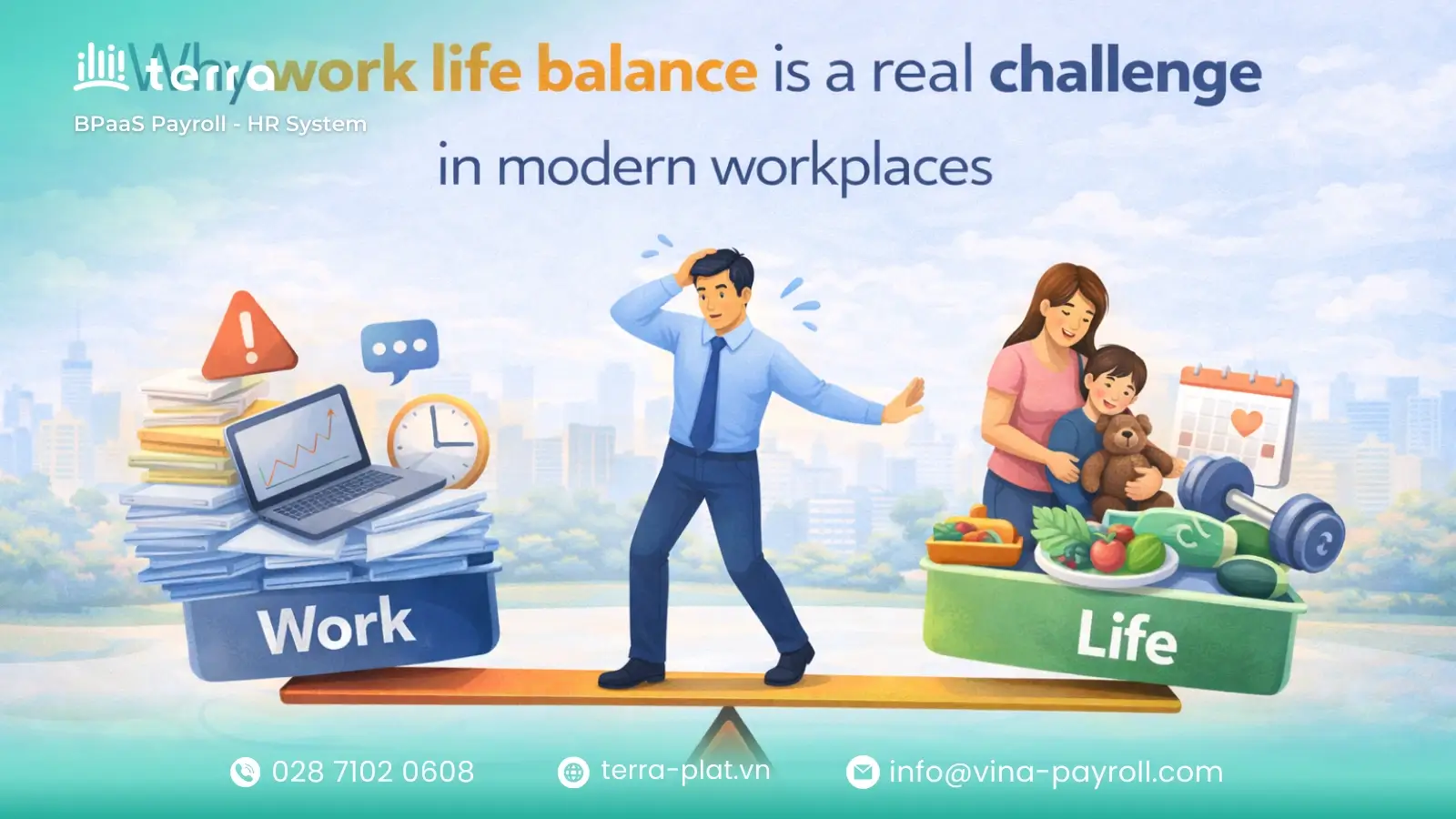
Why work life balance is a real challenge in modern workplaces
Despite technological promises of “efficiency,” the modern labor force faces unprecedented hurdles in staying balanced.
Mental health under constant pressure
The “attention economy” has infiltrated the workspace. Employees are bombarded with real-time notifications, demanding instant responses. This state of “hyper-responsiveness” keeps the brain in a permanent fight-or-flight mode, leading to chronic anxiety and decision fatigue. In Vietnam’s competitive market, the cultural pressure to be “first” often exacerbates this mental strain.
Physical well-being in always-on work environments
The “always-on” culture isn’t just a mental burden; it’s a physical one. Sedentary lifestyles, coupled with the lack of physical boundaries between work and rest, contribute to a rise in ergonomic injuries and metabolic syndromes. Prolonged screen time without structured breaks leads to severe vision impairment and spinal issues that diminish long-term labor capacity.
Productivity vs. sustainable performance
There is a dangerous fallacy that “more hours equals more output.” Modern SEO data shows that while short-term sprints might spike productivity, they inevitably lead to a “performance cliff.” Sustainable performance requires a rhythmic cycle of high-intensity work followed by deliberate recovery periods.
Work life balance and personal relationships
We are social creatures. When professional demands consistently cannibalize personal time, the quality of our primary relationships suffers. This erosion of social support systems removes the very safety net that helps us bounce back from professional setbacks, creating a downward spiral of isolation.
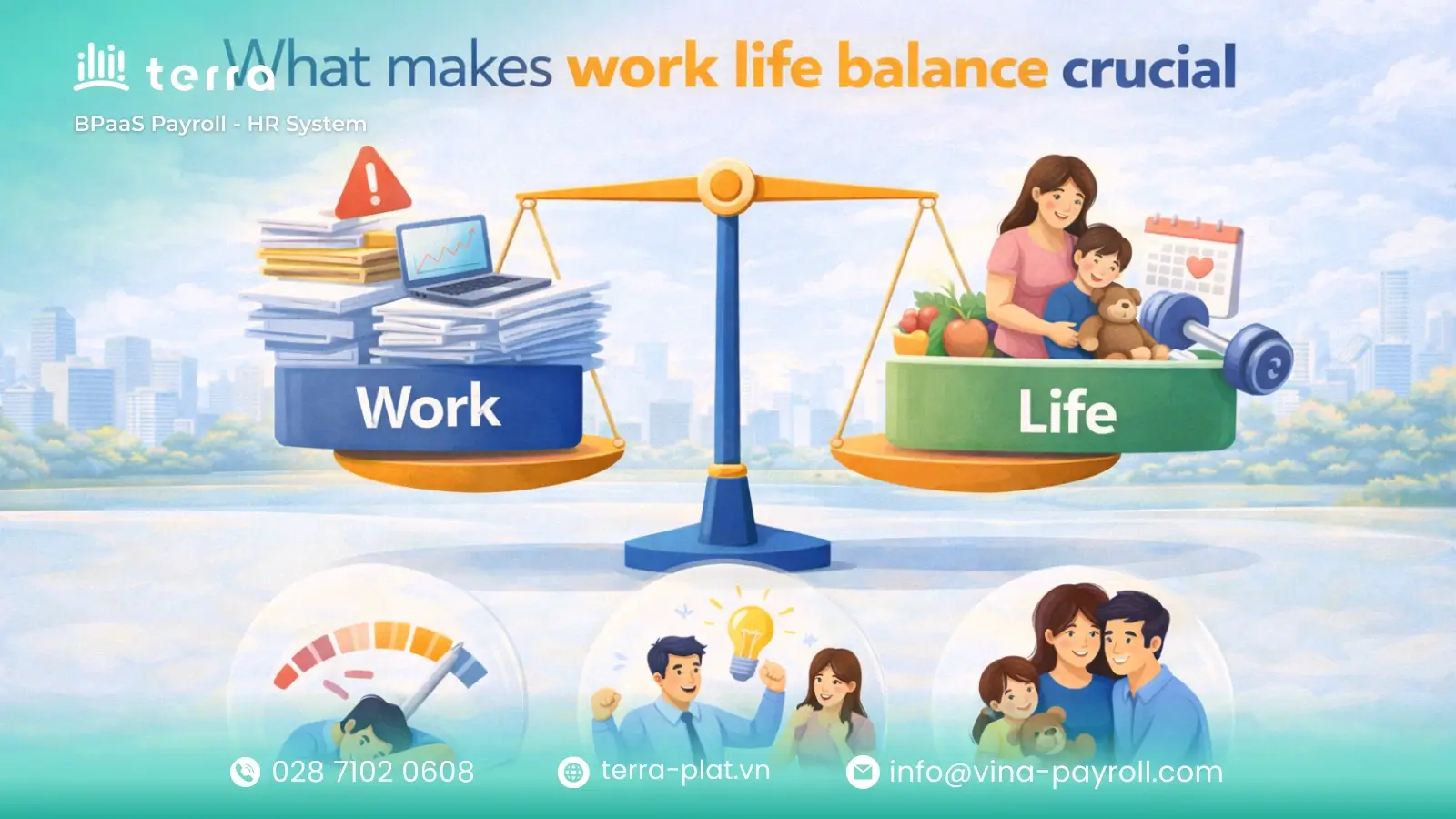
What makes work life balance crucial
Investing in balance isn’t just about “wellness”, it’s about optimizing your most valuable asset yourself.
A decrease in health issues
Scientific data consistently links balance to lower levels of cortisol (the stress hormone). By maintaining boundaries, individuals significantly reduce the risk of heart disease, hypertension, and sleep disorders.
Increased involvement
Employees who feel their personal time is respected are naturally more engaged. They bring their “whole selves” to work, leading to higher levels of discretionary effort and a stronger sense of loyalty to the organization.
A decrease in burnout
Burnout is the ultimate productivity killer. By prioritizing balance, you implement a preventative maintenance strategy for your career, ensuring you remain an effective contributor for decades rather than burning out in years.
Increased mindfulness and concentration
Rest is the fuel for focus. A well-rested mind is capable of Deep Work, the ability to focus without distraction on a cognitively demanding task. This is where real value is created in the 2026 economy.
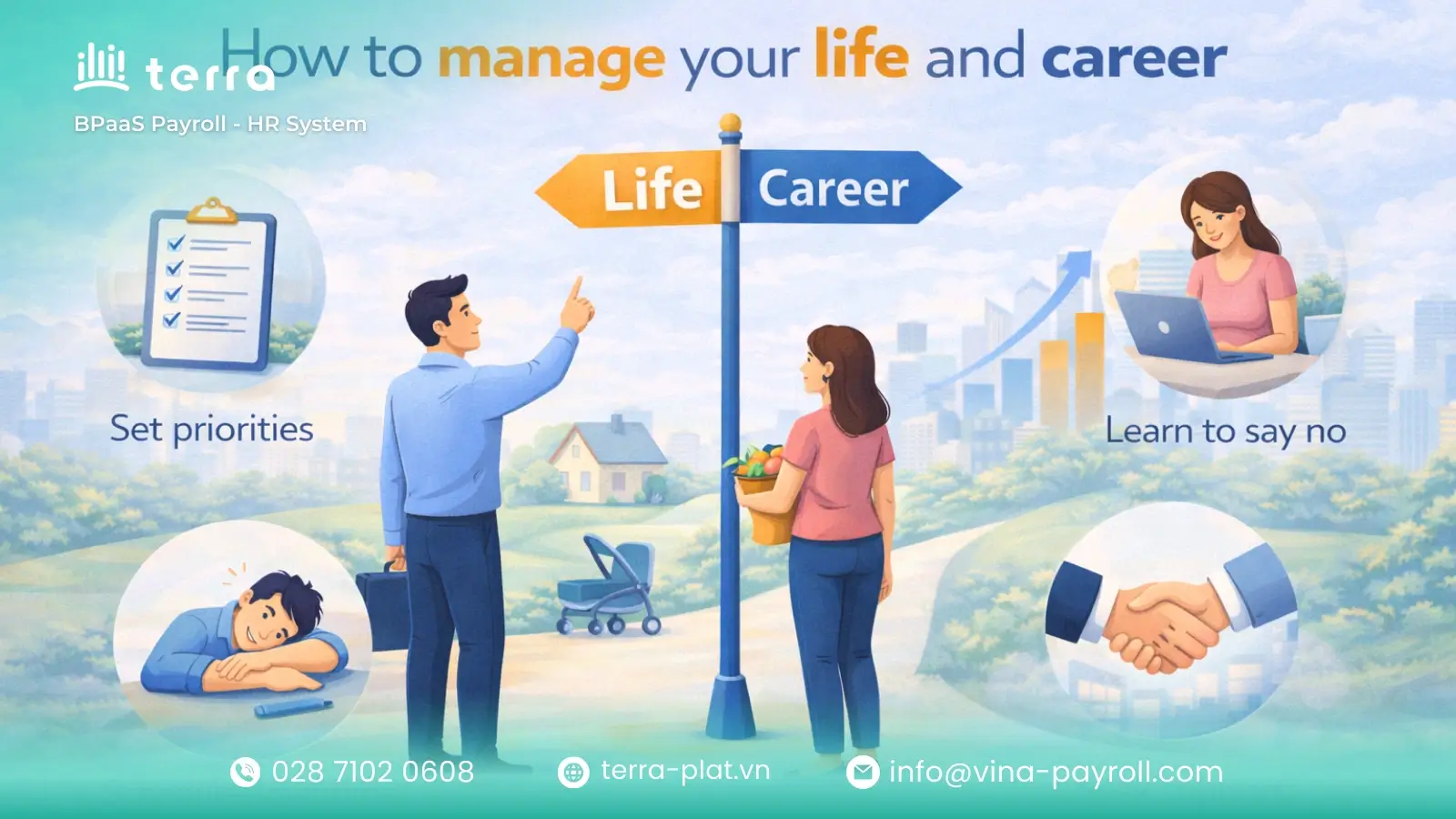
How to manage your life and career
Achieving a sustainable work life balance in an AI-driven economy isn’t about luck; it’s about architectural design. If you don’t design your schedule, your employer (or your inbox) will design it for you. Here is a 5-step tactical approach to maintaining work life balance while scaling your career.
Take a moment to assess
Before you can fix your balance, you need data. Most members of the labor force suffer from “time blindness”, we feel busy, but we don’t know where the time went.
- The audit: For one week, use an AI-powered time-tracking tool (like RescueTime or Toggl) to log every activity.
- The goal: Identify your “leaks.” Are you spending 2 hours a day on “reactive” tasks (answering non-urgent Slacks) instead of “proactive” career-building work?
- Self-reflection: Ask yourself: “Am I working long hours because of the workload, or because of poor workflow?” This assessment is the foundation of the work life balance meaning in practice.
Assess your priorities
In the world of OKR vs KPI, we often get lost in “vanity metrics”, doing tasks that look productive but don’t move the needle.
- Identify your “big rocks”: Apply the 80/20 rule. Identify the 20% of your professional tasks that deliver 80% of your results. Everything else is a “pebble.”
- Personal OKRs: Set Objectives and Key Results for your personal life. If your objective is “Improve Physical Health,” a Key Result could be “Go to the gym 3 times a week.” Treat these personal OKRs with the same professional rigor as your work KPIs.
- Eliminate or delegate: If a task doesn’t align with your top priorities, it’s a candidate for automation or outsourcing.
Learn more: Difference between OKR vs KPI: Which one should you use?
Control your time
“Time Boxing” is the secret weapon of high-performers. Instead of a “To-Do List” (which is just a wish list), move your tasks directly into your calendar.
- The sanctity of the box: If you have boxed 6:00 PM to 8:00 PM for “Family/Dinner,” treat that block as an unbreakable commitment. You wouldn’t skip a meeting with a CEO; don’t skip a meeting with your own well-being.
- Deep work vs. shallow work: Schedule 90-minute “Deep Work” blocks for complex tasks during your peak energy hours. This efficiency allows you to finish work earlier, directly supporting your goal of maintaining work life balance.
Establish limits
In 2026, your phone is a portable office. Without strict boundaries, you are never truly “off the clock.”
- Hard shutdowns: Implement a “Digital Sunset.” For example, at 7:00 PM, all work-related notifications (Slack, Teams, Email) are muted.
- Communication is a tool, not a tether: Just because someone can message you instantly doesn’t mean you are obligated to respond instantly. Set expectations with your team about your “availability windows.”
- Physical boundaries: If you work from home, have a dedicated “work zone.” When you leave that chair, your workday is officially over.
Consider, assess, and repeat
The definition of work life balance is dynamic. It changes as your life changes, a new promotion, a new baby, or a new hobby will require a shift in your system.
- Quarterly re-calibration: Every three months, revisit Step 1. Does your current calendar reflect your current values?
- Forgive the slip-ups: Some weeks will be 80% work; that’s okay, as long as the following week compensates with more “life.”
- The feedback loop: Use your terra HR System data or personal journals to see if your stress levels are trending up or down. Adjustment is a sign of strength, not failure.
Balance between work and life in the AI era
AI is a double-edged sword. To stay balanced, we must learn to wield it correctly.
- AI accelerates work but increases expectations: While AI can draft a report in seconds, it often leads to “expectation inflation,” where stakeholders expect five reports in the time it used to take for one.
- Automation reduces tasks but raises cognitive load: AI handles the “busy work,” leaving humans with the “heavy thinking.” This means our working hours are now more mentally taxing, requiring more frequent cognitive breaks.
- AI monitoring and boundaries: Beware of “Bossware.” While data-driven management can be helpful, constant surveillance can destroy trust and make employees feel they can never truly “log off.”
- Using AI for support: Use AI to automate your personal life, scheduling, meal planning, or summarizing long documents, to win back hours of your day.

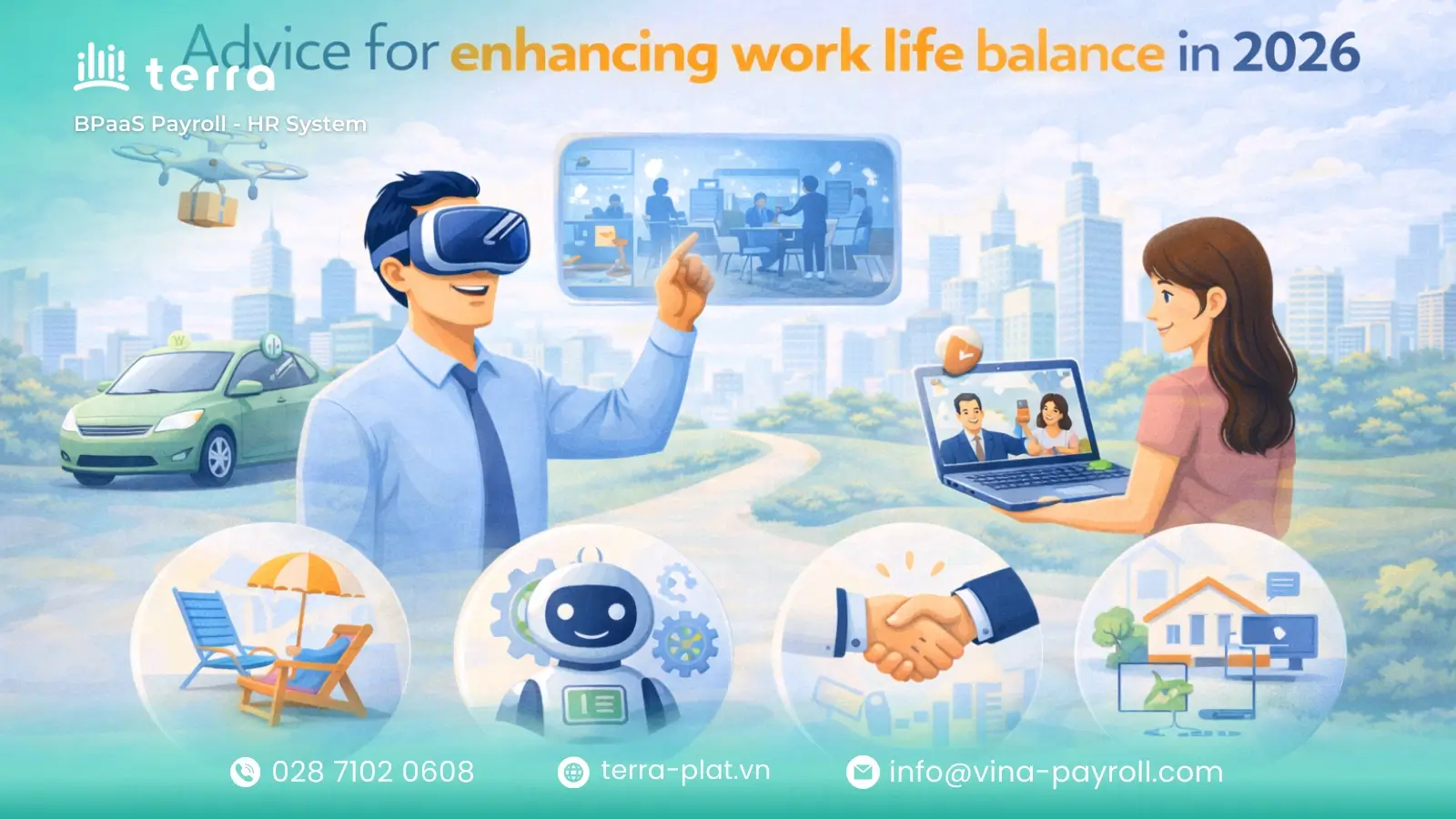
Advice for enhancing work life balance in 2026
For modern organizations, providing a healthy work life balance is no longer just a recruitment tactic, it is a core pillar of a high-performing labor force. To stay competitive in 2026, leaders must move beyond policy and focus on cultural transformation.
Promote relaxation
Traditional lunch breaks are no longer sufficient for the cognitive demands of the AI era.
- The science: High-intensity cognitive work should follow ultradian rhythms. Encourage “Micro-breaks”, 5 to 10-minute mental resets every hour.
- Actionable step: Implement “Breathing Room” blocks in shared calendars where no one is expected to be available. This prevents total exhaustion and keeps the brain’s “operating system” running smoothly.
Build the ability to disconnect
Maintaining work life balance is impossible if the “Always-On” culture starts from the top.
- The right to disconnect: In alignment with global trends and the spirit of the Vietnam Labor Code 2019, organizations should formalize the “Right to Disconnect.”
- Leadership role modeling: Managers must stop sending non-urgent emails or Slack messages during weekends or after 7:00 PM. If a leader doesn’t disconnect, the team won’t feel safe doing so.
Ask for input from employees
The work life balance meaning varies drastically across your labor force demographics.
- Gen Z & millennials: Often prioritize mental health days and “Digital Nomad” flexibility.
- Gen X & boomers: May prioritize healthcare support and predictable schedules for family care.
- Actionable step: Conduct quarterly “Stay Interviews” or anonymous surveys to tailor your Employee Benefits package to the actual needs of your specific team rather than a generic template.
Put values into action
In the modern market, the work life balance meaning is often diluted by corporate jargon. For a values-driven organization, balance shouldn’t just be a line in an employee handbook; it must be a lived experience.
- Walk the talk: If your company values state “Family First,” but leadership promotes those who work 80-hour weeks, your values are inactive. Putting values into action means rewarding efficiency and boundaries.
- Tangible employee benefits: Translate values into specific perks. This could include “Unplugged Days” (mandatory company-wide mental health days) or “Focus Fridays” where no internal communication is allowed.
- Authenticity is SEO for culture: Just as Google rewards authentic content, the labor force rewards authentic leadership. When employees see values translated into action, trust increases, which is the primary driver of long-term retention.
Redesign workflows, not just schedules
A flexible schedule is useless if the workload is unsustainable. Many companies fall into the trap of “Work about Work”, the time spent on status updates, unnecessary meetings, and searching for information.
- The workflow audit: If a meeting can be an asynchronous Loom video or a structured document, cancel the meeting.
- Focus on impact: Shift the management mindset from “Presence-based” (watching the clock) to “Impact-based.”
Leverage automation to reduce cognitive load
In 2026, the primary cause of burnout isn’t just “hard work”; it’s Cognitive Load.
- Delegating to AI: Use automated systems for repetitive data entry, reporting, and administrative follow-ups.
- Human-centric roles: By leveraging tools like the terra HR System, you remove the “mental clutter” of administrative tasks, allowing your labor force to focus on creative and strategic work that provides a sense of accomplishment rather than drain.
Outsource repetitive and high-pressure tasks
One of the most effective ways of maintaining work life balance, especially for HR teams and managers, is to remove the “administrative weight” that causes cognitive fatigue.
- The HR burden: HR professionals are the “doctors” of an organization’s health, yet they are often the most burned out. Repetitive tasks like payroll, social insurance compliance, and document management are high-pressure and low-creativity.
- Strategic outsourcing: By outsourcing these functions to specialists or utilizing a platform like terra HR System, you allow your internal team to focus on “High-Value Human Capital” tasks.
- Sustainable labor force: Outsourcing isn’t just about saving money; it’s about saving the mental energy of your team. When you automate the “busy work,” you provide your employees with the greatest benefit of all: the time to think and breathe.
Protect deep work time
Constant interruptions are the enemy of efficiency. When employees are interrupted, it takes an average of 23 minutes to regain full focus.
- No-meeting days: Implement “No-Meeting Wednesdays” or “Focus Fridays.”
- The result: By protecting blocks of time for deep focus, employees finish their high-value tasks faster, making it easier to log off on time and achieve a true work life balance.
Encourage outcome-based performance
The year 2026 marks the official end of “Presenteeism.” The focus has shifted entirely to what you produce, not how many hours you sat at a desk. This is where the debate of OKR vs KPI becomes essential for balance.
- The shift: While KPIs (Key Performance Indicators) are excellent for tracking specific metrics, they can sometimes lead to “grinding” to hit a number. OKRs (Objectives and Key Results), however, focus on the ultimate outcome.
- Autonomy as a benefit: When you set clear OKRs, you give the employee the autonomy to manage their own schedule. If they hit their “Key Results” in 30 hours instead of 40, they should be rewarded with time, the ultimate work life balance definition in action.
- Trust over surveillance: Outcome-based performance requires a culture of trust. By measuring results rather than activity, you reduce the stress of “performance theater” and allow employees to work during their peak energy hours.
Support mental health proactively
Mental health is a proactive investment, not a reactive fix.
- Integrated benefits: Move beyond basic health insurance. Modern Employee Benefits should include access to professional counseling, mindfulness apps, and stress-management workshops.
- Psychological safety: Foster an environment where employees feel safe saying, “I am reaching my limit,” without fear of career repercussions.
Make work life balance measurable with terra HR System
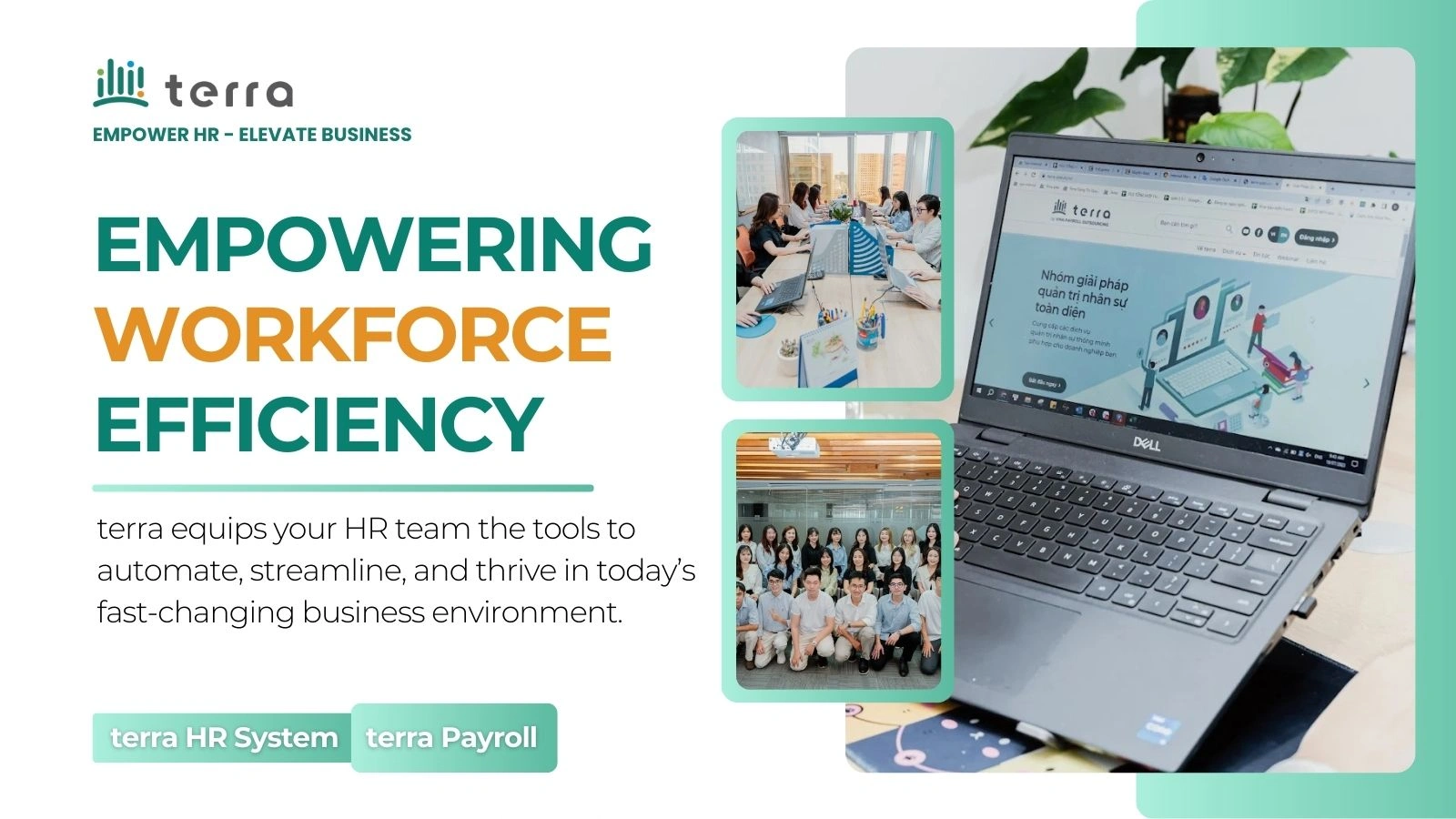
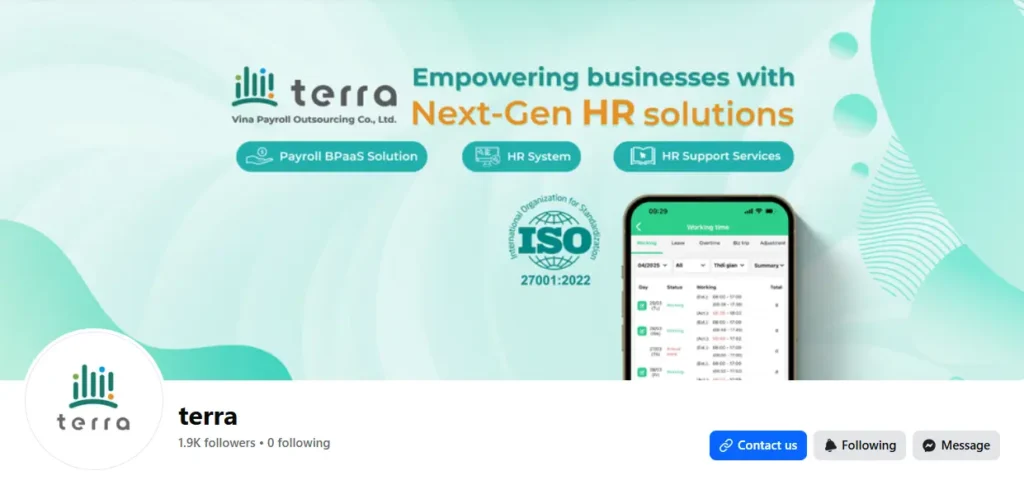
While specialized recruitment software is excellent for talent acquisition, many businesses find greater value in a unified system. terra HR Management System is a comprehensive solution that integrates recruitment directly into the core HR workflow.
This all-in-one terra HR Solution provides a single hub for all employee data, so when you hire a candidate, their profile automatically transfers to payroll and management, eliminating errors and creating a seamless onboarding process.
- Core HR management: This is the central heart of the terra HR Platform. It securely stores and manages all employee profiles, contracts, and insurance details, eliminating paperwork and providing instant, centralized access to all critical records.
- Automated payroll management: This module automates complex calculations for salary, Personal Income Tax (PIT), and social insurance, ensuring 100% compliance with Vietnamese regulations. terra HR software links directly to timekeeping data to generate accurate, individual pay slips for every employee.
- Time & attendance management: Effectively track working hours, overtime, and diverse leave policies. This feature integrates with time clocks and allows employees to request time off, giving managers a clear, real-time view of attendance data.
- Performance & goal management: Set, track, and evaluate employee performance against clear objectives. This tool supports regular reviews and helps you make informed, data-driven decisions on promotions, employee training, and contract renewals.
Conclusion
Work life balance in 2026 is an active discipline, not a passive state. It requires the right mindset, the right boundaries, and the right technology. By leveraging AI to reduce your load rather than increase our speed, you can build a future where both the business and the individual thrive.